

Risk Management · 2025
In this section3 topics
Risk Management Policy & Plan
Sub Introduction
Risk management is an important process that helps AIS and its group companies (AIS) achieve their objectives and goals as well as appropriately respond to the expectations of various stakeholders. AIS has established an Enterprise Risk Management Policy and Framework applicable to the corporate and operational levels in order to manage and maintain risks at an acceptable level (Risk Appetite). The Enterprise Risk Management framework of AIS consists of the following components.
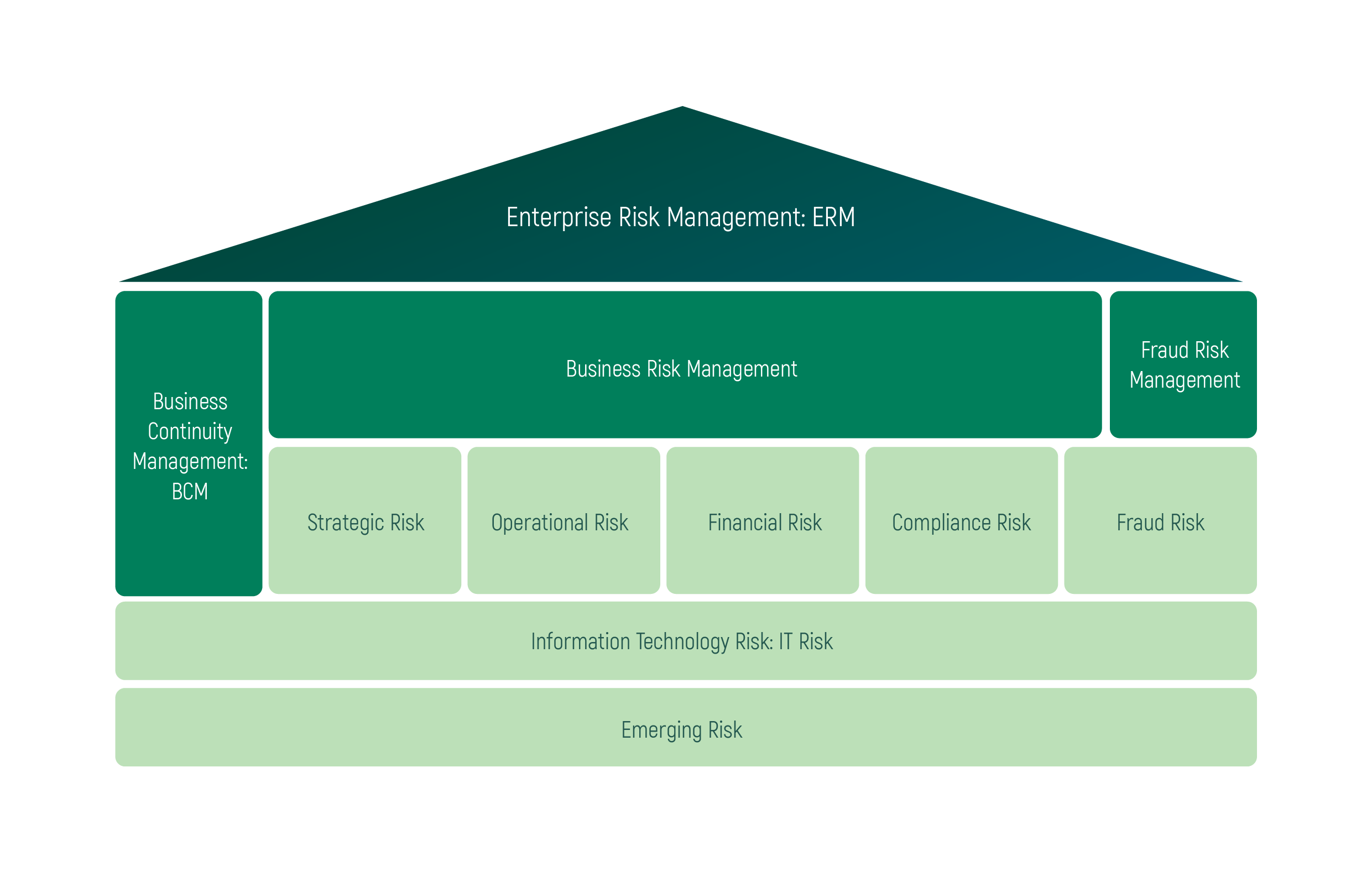
The AIS Enterprise Risk Management comprehensively considers key issues across various dimensions in alignment with enterprise risk management principles. This includes Business Risk Management, Strategic Risk (S), Operational Risk (O), Financial Risk (F), and Compliance Risk (C). In addition, the company addresses Fraud Risk Management, which covers anti-corruption measures. Information Technology Risk (IT Risk), including Cybersecurity Risk, which is critical to the company’s operations. Furthermore, AIS considers Emerging Risks that are expected to have a significant long-term impact on the company’s business operations.
AIS Enterprise Risk Management Framework & Processes
The AIS Enterprise Risk Management framework and process are aligned with the integrated framework of the COSO ERM 2017: Enterprise Risk Management Integrating with Strategy and Performance and is applied to business risk management and fraud risk management. The 7 steps in the risk management process are:
Set objectives at both corporate and functional levels, with alignment to the AIS corporate strategy and are within its risk appetite as approved by the Board of Directors and reviewed annually.
Identify the events that could have a negative impact (risks) on AIS’s ability to achieve its goals and targets considering internal factors such as operational processes and human resources, and external factors such as customers, the economy, politics, and regulations.
Assess the identified risks by considering the likelihood of the risk occurring and the potential impact if the risk were to occur. Added to this is the correlation between the impact of any risk and how it could affect another risk.
Risk assessment approaches may be qualitative, quantitative, or a combination of both.
Qualitative assessment approaches, such as interviews, workshops, surveys, and benchmarking.
Quantitative assessment approaches, such as Monte Carlo simulations, sensitivity analysis and scenario analysis.
Prioritize risks with consideration to the degree of importance of each risk and the potential damage to the Company.
Plan risk response measures with consideration to the level of risk involved and the corresponding cost and benefit.
Establish control activities to help ensure that the desired risk responses are implemented as intended and are carried out effectively.
Monitor and report the status of risks and the effectiveness of the risk management process. Reports are to be forwarded to the Audit and Risk Committee and the Board of Directors regularly.
Effectiveness of Risk Management Process
To ensure appropriateness and effectiveness of the Risk Management Process, AIS conducts both internal audit and external audit.
Internal Audit:
Audit and Risk Committee, appointed by the Board of Directors, is responsible for performing risk oversight to ensure compliance with the Company’s risk management framework and guidelines. The Audit and Risk Committee conducts quarterly meetings to review and assess the adequacy and effectiveness of risk management.
External Audit:
External parties including independent third-party auditors, assess the effectiveness of risk management process annually, as a part of other management standards i.e., ISO/IEC 27001 (Information Security Management Systems), ISO 22301:2019 (Business Continuity Management System), ISO 50001:2018 Energy management systems and ISO/IEC 20000-1:2018 Information technology — Service management.
Regulators such as National Cyber Security Agency (NCSA) and Bank of Thailand (BOT) specifically review IT risks.
Roles and responsibilities of AIS Risk Management
Board of Directors
The Board of Directors is responsible for overseeing overall risk management in accordance with business strategies and objectives by establishing the Company’s risk management policy, risk appetite and tolerance, considering key risks and mitigation plans and fostering a risk management culture within the Company.
Audit and Risk Committee
The Audit and Risk Committee, appointed by the Board of Directors, is responsible for performing risk oversight to ensure compliance with the Company’s risk management framework and guidelines. The Audit and Risk Committee is also responsible for reviewing the appropriateness and effectiveness of the Company’s business processes and risk management process.
Risk Management Committee
The Risk Management Committee is chaired by the Chief Executive Officer and comprises heads of the business units. The Risk Management Committee holds quarterly meetings in order to identify and assess new risks and correlations with other identified risks as well as to review and follow up on the accomplishments of its risk management strategy by comparing action plans against their measured results.
The Risk Management Committee reports the risk management results to the Audit and Risk Committee and the Board of Directors on a quarterly basis to ensure that the Company’s key risks are closely monitored and managed to an acceptable level and that the Company is able to accomplish its goals and objectives.
Risk Management Unit
The Risk Management Unit is responsible for providing advice to the management and employees on implementing the risk management process in accordance with the established framework. It is also responsible for integrating the risk management process into the strategic planning process.
Chief Executive Officer
The Chief Executive Officer is responsible for determining key operational strategies, taking into account the Company’s risk appetite. The CEO is the ultimate owner of all risk issues of the Company and is responsible for promoting a risk management culture at all levels of employees.
Heads of business units
Heads of business units are responsible for complying with the risk management policy and framework, as well as communicating them to employees within their line of work to ensure understanding. They are responsible for identifying, assessing and managing risks associated with their work line in accordance with the Company's established framework and delivering information to the Risk Management Unit.
Employees
Employees are responsible for learning and having awareness of risk management and applying the risk management policy and framework.
Policy & Plan Description
Fraud and Corruption Risk Management
AIS has declared its anti-bribery and corruption policy to provide guidelines for directors, executives, and employees at all levels in their performance of duties and to enable the Company to comply with relevant laws and regulations. It also prevents the Company, directors, executives, employees, and stakeholders from performing any act that may violate the laws on bribery and corruption. Additionally, AIS carries out an assessment of risks associated with bribery and corruption every 3 years and has designed the work processes for the involved department to prevent any risks arising from bribery and corruption.
To manage corruption risks, AIS has declared its policy on management of risks arising from corruption to prevent, monitor, report, and manage corruption issues. The policy has prescribed guidelines on managing corruption risks according to the following three aspects:
Prevention – proactively identify, assess, review and respond to all possible acts of fraud in the organization and communicate such issues to employees at all levels to build awareness and understanding of the importance of fraud, corruption and misconduct reporting.
Detection – check or investigate any misconduct or fraudulent case where there is reasonable suspicion.
Response – perform investigation processes through to punishment.
The Company’s objective is that directors, executives and employees are aware of fraud risk and notify the Company of any action possibly leading to fraud immediately while being ready to fully cooperate in any investigation relating thereto.
Business Continuity Management
AIS has set in place a business continuity management system in conformance with international standards. The objective is to continue operations in the event of natural disaster or any other situation beyond the Company’s control with the potential to cause interruption to its core operating system and a loss of company property and personnel including Critical Business Process at both central and regional levels, including AIS Group and subsidiary companies.
In support of this system, AIS has established the Business Continuity Management policy and manual and appointed the Crisis Management Committee, comprising top executives from each business unit and chaired by the Chief Executive Officer. The Crisis Management Committee is given the responsibility and authority to make decisions during times of crisis, including incident response and overseeing necessary internal and external communication in an efficient and timely manner to ensure the effectiveness and sustainability of the Company’s business.
AIS has in place a Business Continuity Management System comprised of an Enterprise Business Continuity Plan (Enterprise BCP), Departmental Business Continuity Plan (Departmental BCP) and IT Disaster Recovery Plan (IT DRP). Risk assessment of any threat to the Company must assess both the likelihood of that threat occurring and its impact in order to prepare the Business Continuity Plan at each level as detail below:
The Enterprise BCP by assessing threat that might impact the Company, for coping with the crisis or any emergencies which could adversely affect or damage working facilities or staff.
Departmental BCPs based on the findings of the Business Impact Analysis (BIA), are also in place to manage the situation in the event that any department is not able to perform any process that could directly impact the Company’s products or services.
IT Disaster Recovery Plan (IT DRP): The plan has been established to provide a strategy and working process to recover all information technology systems that support critical processes. This includes all of the resources required to ensure business continuity within an acceptable recovery time and to an acceptable operational level.
BCP for critical business process: The AIS Business Continuity Management Committee has assigned senior executives and heads of related parties to prepare the business continuity plan to ensure continuation of critical business processes that have a direct impact on the Company’s ability to deliver its critical services. It is the responsibility of all management and staff to support the activities related to business continuity management. Chief among them are preparation of the business continuity plan, allocation of resources according to the business continuity plan, carrying out practice drills, and reviewing the plan to ensure the effectiveness of business continuity management.
AIS received the ISO 22301:2019 Business Continuity Management System (BCMS) in Cloud Service and Co-Location businesses for having developed the business continuity management system in compliance with the ISO requirements to deal with any emergency or natural disaster in support of sustainable development. Also, the Company conducts business continuity plan exercises annually to be prepared for handling emergency situations, enabling AIS to provide continuous services according to the predefined business continuity plan.
Building an organizational culture of Enterprise Risk Management
To promote a robust implementation of the risk management framework, the Company has put in place various activities to embed risk culture among management and employees, building awareness and understanding of roles and responsibilities to apply risk management in day-to-day operations to enhance their abilities to achieve the Company’s objectives and goals. AIS works to foster an organizational culture of risk management by doing the following:
Tone at the top
Set clear direction for the Company and communicate to ensure employees at all levels have the same understanding and acknowledge the direction and obstacles/challenges of the company’s business operations in the short-term and long-term. Management set clear expectations for employees to manage risk to achievement of objectives.
Management, as a role model, actively discuss about risk and risk appetite in day-to-day operations and activities.
Accountability
Management and employees understand their accountability for managing risk. These roles are clearly stated in the Company’s Risk Management Policy and Manual. It is also repeated regularly via various communication methods such as training and awareness sessions.
Promote open and honest communication among all relevant parties, including risk-related information and incidents. An escalation process is designed and implemented to ensure the critical incidents are reported and recovered in a timely manner.
Risk resources and competence
Encourage directors and executives to attend training and development in Risk Management related topics including selected trending issues in various forms such as the training programs, knowledge sharing by experts and other activities. The executives are encouraged to share the content with staff in their business units.
Provide knowledge of Risk Management principles to employees via online learning platform (AIS LearnDi) where employee can self-study at their convenience.
Publish knowledge-sharing material via infographic, easy-to-understand e-brochures for all employees.
Risk Management Unit provides advice to other departments in applying risk management concept to their functions via facilitated risk workshops, risk register template, etc. Risk Management Unit also conducts hands-on training on risk management, allowing staff from any departments to attend.
Decision making and motivation
Promote discussion on what risks are acceptable, or not acceptable, and use this information as a basis for decision making process.
Integrate risk management with the company's new product and/or service development process. In the feasibility study process, the project owner shall identify the risk factors such as financial risk, regulatory and compliance risk along with related mitigation plans to support the consideration of project approval.
Integrate risk management into other business processes. For example, make risk assessment a part of the Company's third-party vendor selection process. Assign a representative from each business unit to serve as risk coordinator, to collaborate between first-line process owners and second-line units such as risk management and cybersecurity.
Policy Document Link
https://investor.ais.co.th/misc/cg/20230630-advanc-risk-management-en.pdf
Risks to the Company's Business Operations
Risk Register
| Risk Name | Risk Characteristics | Consequences | Management Measures | Related Risk Factors |
|---|---|---|---|---|
| Risk from Changes in Government Policies, Rules, Regulations, and Orders of Regulators | AIS operates under the supervision of government agencies such as NBTC, the organization responsible for regulating operators under granted license in the telecommunications industry and with the legal authority to issue rules, regulations, and orders to regulate licensees. Rules, regulations, and orders issued in the future may potentially affect the Company’s business operations. | Potential affect to the Company’s business operations, reducing the Company’s ability to generate profit, and/or increase the cost of services. | AIS has a dedicated unit responsible for monitoring the issuance and changes in government regulations, regularly reporting updates to management, and coordinating with relevant departments to ensure they are promptly informed and prepared to respond. The unit’s role includes acting as an intermediary to coordinate with government agencies and ensuring that it is given all the necessary information on the business impact of regulations. Furthermore, the Company, as a service provider which is a direct stakeholder, is invited to provide opinions and comments on drafts of laws, rules, regulations and/or orders which will be issued for enforcement in the future. Through this unit, the Company also has the opportunity to make comments or suggestions and/or raise concerns or opposition to the enactment of laws, rules, regulations and/or orders in the event that they are deemed likely to have a serious impact on the Company’s operations, or to have been unlawfully conducted. | 756 · Description: Change in laws and regulations · Info category: COMPLIANCE_RISK · 757 · Description: Laws and regulations is not favorable for doing business · Info category: COMPLIANCE_RISK |
| Risks Arising from Disputes with Government Agencies | In the past, AIS operated a business providing telecommunications services under concession agreement with State Enterprises. This required the transfer of assets which the Company had invested for use in its business operations to government contracting parties as well as the implementation of revenue sharing models at specified rates. Formerly, AIS encountered a number of disputes arising from disagreement in the interpretation of Agreements such as the amount of revenue to be shared. In some cases, NBTC announcements, regulations or orders resulted in impacting upon AIS business operations or concerns for compliance to the extent that it could affect business operation or operating income and/or increase service costs. In many cases, AIS exercised its right under the law to sue the NBTC in a court of law in order to contest the legitimacy of the actions undertaken by the NBTC. (Information and additional details are shown under the topic Legal Disputes) | If the final ruling on the dispute is in favor of the opposing party, there is a possibility that the court may order AIS to pay fines or financial penalties, resulting in increased expenses and decreased profitability. Additionally, it could negatively impact AIS's reputation and image. | AIS established a department that is directly responsible for coordinating with government agencies so that the Company as a contract party can conduct its business correctly and in complete compliance with relevant contracts. In the event of a conflict, the Company would enter into negotiations with the aim of seeking a prompt settlement. In the event that the issue could not be resolved through negotiation, the dispute would be entered into the dispute resolution process by the arbitral tribunal as specified in the Agreement. In addition, the matter would be taken before a court with the jurisdiction to rule a final decision. | 758 · Description: Violations of laws and regulations · Info category: COMPLIANCE_RISK · 1723 · Description: Legal risk · Info category: COMPLIANCE_RISK |
| Risk from Market Saturation and Declining Growth | Given the current conditions of the telecom market, particularly in the mobile business, the penetration rate remains relatively high at over 142%, resulting in limited growth opportunities from further subscriber expansion. The corporate mergers within the industry, undertaken to achieve cost efficiencies and enhance profitability, further reflects the constrained growth potential of the telecom business and indicates that the market has reached a state of saturation. In addition, adverse factors such as Thailand’s economic growth remaining below its potential, high household debt levels, and global geopolitical uncertainties continue to heighten risks to the country’s economic growth, directly affecting consumer purchasing power. Collectively, these factors limit opportunities for incremental revenue growth in the telecom industry, while service providers are still required to invest in network infrastructure to support increasing usage demand and to compete by delivering quality services at affordable prices, thereby increasing business risks and potentially leading to lower returns. | Risk of lower returns for the business. | • Develop into new technologies such as 5G, which opens up opportunities for products and services that can be differentiated and are more diverse than 4G services, both for residential and corporate customers. This will help generate additional new forms of income. • Expand Fixed Broadband services by offering a diverse range of products and services, strategically utilizing sales promotions, including cross-selling and upselling, to enhance customer value and drive ARPU. • Drive new digital business to offer services related to daily life in digital form to customers such as video platform services, insurance service and financial services, etc., which will help create new sources of income. • Enhance the quality of after sales services and privileges program to build differentiation and gain customer engagement. • Develop strategies for maintaining the customer base and offering personalized products and services that meet the needs of customers by using Advanced Analytics Tools. • Manage costs prudently with respect to investment evaluation to create good returns to ensure the Company can generate steady cash flow over the long term, and efficient operational cost management by using technology to streamline processes to ensure appropriate cost and deliver a good service experience for customers. | 728 · Description: Volatility in the industry in which the company operates · Info category: STRATEGIC_RISK · 729 · Description: Behavior or needs of customers / consumers · Info category: STRATEGIC_RISK · 765 · Description: Fluctuation in return on assets or investment · Info category: FINANCIAL_RISK · 1725 · Description: Income volatility · Info category: FINANCIAL_RISK · 1715 · Description: Economic risk · Info category: STRATEGIC_RISK |
| Risk from Technological Advancements and substitution of products and services | Changes and advances in technology, especially digital technology, have enabled new types of products and services, new entrant as service providers, new digital and online channels or even new business models with lower cost structure. These includes platform providers (Over the Top: OTT) of various services such as messaging, music, video and social media, where no investment in telecommunication infrastructure is required and hence has enabled consumers to enjoy more alternative services from OTT with low fees or in some cases for free based on advertising model. Moreover, there has been an increase in new services that may substitute services currently provided by the Company, such as internet service via satellite. These trends directly affect the business operations of the Company, requiring it to continue to invest in and improve its network while developing and offering products and services that generate revenue and respond to customer needs. It is imperative for the Company to adapt and develop its business plan to tackle these challenges in order to retain customer base, generate revenue and sustain long term growth. | Impact ability to generate revenue and sustain long term growth. | • Define key strategies, both short-term and long-term, to respond to changing customer behavior and technologies. • Invest in new business to create new sources of revenue over the long term focusing on new digital business in collaboration with partners and industry experts such as Data Center business, Cloud, IoT, Cyber security, Digital finance. • Develop and improve existing products and services with advanced technologies to address digital lifestyle of consumer, for example: • Offer new value-added products and services for mobile phone, high-speed internet, and digital content to reduce complexity, save costs for customers, and increase privileges to attract customers. • Increase capabilities to satisfy customer needs, using Data Analytics to offer products and services that meet customer demand. • Digitalize customer service e.g. online product offering, build AI/Chatbot capabilities and implement Robotic Process Automation for customer services. • Develop the network infrastructure, customer service systems and support systems by incorporating new technology such as cloud technology. • Transform the organizational structure and develop the competency of employees to support the key strategies of the Company. • Invest in research and development of innovation by capturing trends and new technologies as well as partnering with external organizations and business partners to research and develop innovation. | 729 · Description: Behavior or needs of customers / consumers · Info category: STRATEGIC_RISK · 732 · Description: Changes in technologies · Info category: STRATEGIC_RISK · 765 · Description: Fluctuation in return on assets or investment · Info category: FINANCIAL_RISK · 743 · Description: Product obsolescence · Info category: OPERATIONAL_RISK · 1725 · Description: Income volatility · Info category: FINANCIAL_RISK · 1714 · Description: Competition risk · Info category: STRATEGIC_RISK |
| Risk in acquiring and retaining talents to cope with market changes | The global situations and the market outlook have witnessed changes in various dimensions. Examples are the aging population trend, the emerging businesses to address changing consumer behavior, and rapidly-evolving technology advancements increase risk of a skills gap. Critical skills such as Artificial Intelligence (AI), Advanced Data Analytics, and Cybersecurity are in high demand. Moreover, intense competition in the labor market poses a significant risk to talent retention, particularly the potential loss of high-performing employees due to misalignment in compensation and benefits. Additionally, managing the Hybrid Work Model presents challenges that may impact employee morale and motivation, as well as overall effectiveness in driving innovation. It is essential for the Company to be able to respond quickly to customer needs. If the Company cannot develop the necessary skills or capabilities in a timely manner, its competitive advantage both in current businesses and new businesses in the future will be impacted. | If the Company is unable to develop its employees' skills and abilities to meet the demands of a changing global environment, it may lose its competitive advantage, both in its current business and in new businesses that may emerge in the future. | • Recruit employees with new abilities that meet the needs of the Company and develop the necessary skills or capabilities that can be applied in new businesses in the future. • Collaborate with world-class institutions that have specific expertise to lay the foundations for developing the requisite knowledge and prepare high-potential employees for the digital business age to ensure readiness for emerging risks in the digital era. • Develop a succession plan with a clear Career Model and open up various opportunities for growth in the organization. • Create an organizational culture towards the digital era with agility, capability, continuous self-improvement and ethics (FIT FUN FAIR). | 739 · Description: Shortage or reliance on skilled workers · Info category: OPERATIONAL_RISK |
| Supply Chain Risk | The Company sources its network equipment and maintenance services including replacement parts in crisis from a limited number of vendors/suppliers available, mainly from China and European countries. In general, telecommunication service providers tend to use only 1-2 equipment vendors to ensure technology compatibility for nationwide service as well as proper maintenance service. During the past few years, an increased tension caused by public policy and trade disputes between the People’s Republic of China and the United States of America. If those vendors/suppliers are unable to deliver the network equipment, it may affect the network expansion and maintenance plans. | If the network equipment vendors/suppliers are unable to deliver products and services as agreed, it may negatively impact the quality of service and customer satisfaction. | • Apply a multi-vendor purchasing policy for major equipment and services to prevent risk of rely on a single supplier. • Establish an approved vendor/supplier list of vendors/suppliers that pass the Company’s quality standards (Multi-vendor). • Maintain the equipment and spare parts inventory at a suitable level in order to avoid shortages. • Engage in a long-term contract (Frame Contract) with main vendors/service suppliers. • Explore new technologies to reduce dependence on a particular equipment. | 740 · Description: Shortage or fluctuation in pricing of raw materials or productive resources · Info category: OPERATIONAL_RISK · 745 · Description: Loss or damage from non-compliance of partners or counterparties · Info category: OPERATIONAL_RISK · 735 · Description: Reliance on large partners / distributors or few partners / distributors · Info category: STRATEGIC_RISK · 746 · Description: Delays in the development of future projects · Info category: OPERATIONAL_RISK |
| Risk from Major Network Failure or Interruption to Important Systems | Telecommunications services are part of the basic infrastructure for consumers and enterprises. An uncontrollable disaster, natural disaster, or crisis event could potentially lead to the interruption of the Company’s network primary operating systems and business activities, directly affecting the continuity of service delivery, Company reputation and reliability, loss of revenue, and additional expense to compensate customers and to recover the services. | Directly affecting the continuity of service delivery, company reputation and reliability, loss of revenue, and additional expense to compensate customers and to recover the services. | • Set up redundancy and backup for several key operating systems required to provide service. • Set up a system and process for monitoring the quality and operation of the network and resolve problems in a timely manner. • Schedule maintenance plan for equipment and systems in important parts. • Adopted an infrastructure design that reduces the potential impact from disasters e.g. applying the EIA-222C standard to telecom towers to support higher wind speeds than in recorded Thai history, raising the height of base stations using reference points from previous severe flood incidents. • Establish Business Continuity Management (BCM) policy at both the corporate and departmental levels and conduct an Annual Review and carry out exercises to practice and test the Business Continuity Plan. Moreover, AIS received ISO 22301:2019 Business Continuity Management System certification to cope with crisis situations. | 741 · Description: Systems or internal control system · Info category: OPERATIONAL_RISK · 744 · Description: Information security and cyber-attack · Info category: OPERATIONAL_RISK · 736 · Description: Damage to company image and reputation · Info category: STRATEGIC_RISK |
| Risk from Exchange Rate Fluctuation | AIS generates a portion of its revenue and incurs some expenses in foreign currencies due to its international roaming services and the purchase of various network equipment. Therefore, fluctuations in foreign exchange rates may impact the Company's revenue and expenses. | There is a possibility that fluctuations in foreign exchange rates could impact the Company's revenue and expenses. | • To implement the exchange risk management policy through financial instruments. For example, using Forward Contracts that predetermine the exchange rate at the time of the contract date will apply to the future delivery of contracted services. • Use existing foreign currency deposits (Natural Hedge) to make payments for goods and services in foreign currencies. | 764 · Description: Fluctuation in exchange rates, interest rates, or the inflation rate · Info category: FINANCIAL_RISK |
| Risks from the absence of a debt covenant ratio | Due to the terms of the Company’s loan agreement and the absence of a debt covenant ratio in conditions for debenture issuers and holders the Company may potentially incur a level of debt affect its repayment capacity. However, the Company exercises prudent debt management, analyzing the necessity of any debt in relation to the benefit of the associated investment, related opportunities and the generation of revenue and profit that would support long-term growth. | The Company could potentially accumulated debt indefinitely and impacting its repayment ability. | Analysis is performed to appropriately plan cash flow and ensure long-term financial stability, to determine financial obligation repayment capabilities, and to determine the most appropriate borrowing instruments at an optimal cost to minimize any impact on the Company’s financial status. The Company has long maintained a high credit rating among leading domestic and international firms, holding an AAA (tha) rating from Fitch Ratings and BBB+ rating from S&P Global Ratings at the end of 2025, reflecting its strong capacity to settle both interest and principal payments as well as strong financial standing. The Company devotes importance to maintaining its credit rating to ensure capital costs at an appropriate level and long-term financial stability, prioritizing the maintenance of financial ratios that act as key indicators for credit ratings, such as Net Debt to EBITDA, above the standard of ratings firms. | 767 · Other name: Risks from the absence of a debt covenant ratio · Description: Other · Info category: FINANCIAL_RISK |
| Risk of Data Privacy | The Company provides services to a large number of customers, both individuals and enterprises, making it essential to secure personal data and prevent risks arising from the leakage of customer personal data. In addition, risks may occur from the violation of human rights when the Company discloses such information upon request. The Company is also subject to compliance with relevant laws and regulations; for example, the Personal Data Protection Act (PDPA) and the General Data Protection Regulation (GDPR). | Potential damage to the Company's image and reputation, violation of human rights, and financial penalties from regulatory agencies. | • Set up the Data Protection Office (DPO) to monitor and coordinate with other relevant parties and ensure that the Company has proper processes with respect to the collection, use and disclosure personal data. • Develop a Privacy Policy in accordance with relevant laws, regulations and announcements from the government. • Develop procedures to access and manage personal data in a secure manner. Ensure proper internal controls are in place and subject to regular review. • In case the Company has to disclose personal data to government bodies upon request, the Company will verify the legal authority of the requestor, determine the scope of the data as prescribed by law, and ensure that there is no violation of personal rights. • In case of data leakage, processes are in place to handle customer complaints, including how to respond, mitigating actions, and remediation offering. | 756 · Description: Change in laws and regulations · Info category: COMPLIANCE_RISK · 757 · Description: Laws and regulations is not favorable for doing business · Info category: COMPLIANCE_RISK · 758 · Description: Violations of laws and regulations · Info category: COMPLIANCE_RISK · 741 · Description: Systems or internal control system · Info category: OPERATIONAL_RISK · 759 · Description: Corporate Governance · Info category: COMPLIANCE_RISK · 744 · Description: Information security and cyber-attack · Info category: OPERATIONAL_RISK · 736 · Description: Damage to company image and reputation · Info category: STRATEGIC_RISK · 753 · Description: Impact on human rights · Info category: OPERATIONAL_RISK |
| Risk to Information Security and Threats from Cyber-attack | The Company has rapidly developed a variety of products and services to serve customers’ needs following digital era which transformed customers behaviors. While new technology and various IT systems are essential in developing and improving these products and services, the complexity in application of advanced technology also comes with the risks inherent to information technology. Such risks result from the complexity of the technology itself, gaps in the skill and knowledge levels of Company employees, the potential deficiency of the Company’s own systems, and external threats or cyber-attacks. If information security measures are insufficient or incomplete, it can have a serious impact on the Company, especially if important data such as the personal data of customers is compromised. Moreover, cyber-attacks, e.g., DDoS attacks, website phishing, malware/viruses, etc., may cause severe business disruption. | Potential damage to the Company's image and reputation, business interruption, customer's trust, and financial penalties from regulatory agencies. | Ensuring the effectiveness of the Company’s information security, AIS regularly reviews and revises the security policy of the Company’s IT system in the following ways: • Apply internationally-accepted standards and align with the Cybersecurity Act and Personal Data Protection Act. • Develop and extend security tools to cover significant systems such as Multi Factor Authentication (MFA) for accessing information technology systems from outside the Company. Expand threat detection capabilities (Threat Hunting), emphasizing proactive threat detection focusing on reducing detection time and time to handle detected threats and applying automation in the process of detecting and responding to threats, etc. • Enhance information security measures, e.g., by reviewing the access control procedure; maintaining a closed working environment; and building IT awareness across the entire Company. • Enhance staff competencies related to Cybersecurity in order to operate in accordance with the standards for personal data protection, cloud security, vulnerabilities of the system and detection of threats, etc. • Enhance cybersecurity knowledge, understanding, awareness to employees and executives at all levels. • Review and improve cyberthreat response processes to align with the global NIST Cybersecurity Framework and integrating with organization's crisis response plan. • Conduct Cyber Drill every year covering relevant employees and executives. | 741 · Description: Systems or internal control system · Info category: OPERATIONAL_RISK · 744 · Description: Information security and cyber-attack · Info category: OPERATIONAL_RISK · 736 · Description: Damage to company image and reputation · Info category: STRATEGIC_RISK |
| Climate Change Risk | Climate change remains a critical global challenge with increasingly severe impacts. Thailand, which is highly vulnerable to natural disasters and systemic economic, social, and infrastructure risks, has advanced its national Net Zero Greenhouse Gas Emissions target from 2065 to 2050, in alignment with global efforts to limit the rise in global temperatures to safe levels. As a result, climate change is considered a significant emerging risk for businesses and regulatory oversight. The Thai government is currently considering a comprehensive legal framework, including the Climate Change Act, alongside related energy policies and plans to support concrete greenhouse gas (GHG) emissions reduction. These developments are expected to introduce new requirements for disclosure, operational practices, and governance for the private sector in the future. AIS’s business operations are therefore likely to be affected by both physical risks arising from climate change and transition risks associated with the shift toward a low-carbon economy, as outlined below. 1. Physical Risks may cause damage to the Company’s telecommunications and broadband network infrastructure and equipment, including base stations, switching centers, data centers, retail shops, and service centers. These risks can be categorized as follows: - Acute risks, such as storm-related winds and floods, flooding, and landslides, which may disrupt service continuity and result in emergency repair and restoration costs. - Chronic risks, including rising temperatures and sea-level rise, which may reduce equipment efficiency, increase electricity consumption for cooling systems, and require higher long-term investment to enhance infrastructure resilience. 2. Transition Risks toward a Low-Carbon Economy arise from changes in regulations and policies, evolving market expectations, technological advancements, and the transformation of the energy system toward increased use of renewable energy. These risks include: - Policy-driven risks, such as the prospective enforcement of the Climate Change Act, the potential introduction of emissions trading mechanisms, more ambitious Nationally Determined Contribution (NDC) targets, and the draft Power Development Plan (PDP 2024). These factors may increase carbon-related costs and require the Company to reassess its renewable energy procurement strategies. - Technology-driven risks, including volatility in renewable energy technology costs, the cost of implementing the Company’s emissions reduction measures, and long-term trends in technology costs, which may affect investment decisions and the execution of the Company’s decarbonization plans. |
| Physical Risk Management Measures 1) Infrastructure and Asset Resilience
2) Business Continuity and Operational Safety
3) Energy Management and Energy Efficiency
4) Supply Chain and Business Ecosystem Resilience
5) Customer Service Continuity
Transition Risk Management Measures toward a Low-Carbon Economy 1) Planning and Governance
2) Energy Investment and Improvement
3) Technology and Innovation Development
| 756 · Description: Change in laws and regulations · Info category: COMPLIANCE_RISK · 730 · Description: Government policy · Info category: STRATEGIC_RISK · 731 · Description: Policies or international agreements related to business operations · Info category: STRATEGIC_RISK · 750 · Description: Climate change and disasters · Info category: OPERATIONAL_RISK · 1719 · Description: Climate change and disasters · Info category: STRATEGIC_RISK |
| Geopolitical and Geoeconomic Risks | Major geopolitical events such as U.S.-China strategic competition especially through international trade barriers implemented through policies, and terrorist attacks, among other things, are creating shocks on global markets, and subsequently the overall well-being of our domestic economic conditions. These factors result in uncertainty in the macroeconomic environment including consumer and business demand and supply, purchasing power, employment, and tourism. Disruptions in the supply chain for critical components, such as semiconductors and 5G equipment, may lead to increased network investment costs and delays in service expansion. These factors impact both revenue and operating costs across the industrial and service sectors, including the telecommunications industry. Furthermore, geopolitical conflicts heighten cybersecurity risks, as critical national infrastructure may become a target for attacks. This compels the company to strengthen comprehensive risk prevention measures, resulting in additional expenses. | The geopolitical and geoeconomic risks may have the following effects toward our business: • The raising cost of living and the purchasing power of the customers especially in prepaid which holds a majority portion of the subscribers could lower the ability to generate revenue growth. • The increased in operating cost from heighten energy price and inflation including the disruption in supply and demand could impact the Company's profitability and may also delay investments in new businesses. These factors may reduce the competitiveness in the long term. | • Provide products and services in a variety of price levels and packages for consumers to choose according to their purchasing power, including products and services that are targeted to specific customer groups to meet their needs. • Provide various distribution channels for customer to easily access including shops, online channel and agents. • Enhance the features of myAIS application to include other services that meet consumer’s lifestyle and several use cases. • Regularly review the allocation of capital and cost structure among various businesses. Encourage business units to revisit operating model and do transformation programs to improve cost structure. | 740 · Description: Shortage or fluctuation in pricing of raw materials or productive resources · Info category: OPERATIONAL_RISK · 731 · Description: Policies or international agreements related to business operations · Info category: STRATEGIC_RISK · 764 · Description: Fluctuation in exchange rates, interest rates, or the inflation rate · Info category: FINANCIAL_RISK · 733 · Description: Business operations of partners in the supply chain · Info category: STRATEGIC_RISK · 746 · Description: Delays in the development of future projects · Info category: OPERATIONAL_RISK · 1715 · Description: Economic risk · Info category: STRATEGIC_RISK |
| Risk from Adoption of Artificial Intelligence (AI) | With the rapid growth of AI technology, the telecommunications industry has been actively adopting AI to enhance various operational aspects. These applications include network optimization, predictive maintenance, internal operational efficiency, customer service, and data analysis to better meet customer needs and create superior service experiences. While AI offers significant opportunities to deliver more tailored products and services, it also introduces several risks. Cyberattacks targeting AI infrastructure pose a significant threat, potentially leading to service disruptions, data breaches, or biased AI decision-making, which can adversely impact network operations, reputation, and regulatory compliance. Moreover, excessive reliance on AI for customer interactions may result in a loss of human touch, potentially damaging long-term customer relationships and brand loyalty. Furthermore, replacing human roles with AI presents challenges in terms of governance, developing the necessary skills to effectively and safely utilize AI, and maintaining employee morale. | Cyberattacks targeting AI infrastructure may lead to service disruptions, data breaches, or biased AI decision-making, which can adversely impact network operations, reputation, and regulatory compliance. | • Building awareness among executives and employees about AI-related regulations and the risks associated with AI applications. • Developing policies and tools to ensure safe and responsible use of AI. • Closely monitoring AI-related regulations to be issued by regulatory authorities. | 756 · Description: Change in laws and regulations · Info category: COMPLIANCE_RISK · 732 · Description: Changes in technologies · Info category: STRATEGIC_RISK · 744 · Description: Information security and cyber-attack · Info category: OPERATIONAL_RISK · 1720 · Description: System disruption risk · Info category: OPERATIONAL_RISK |
| Risk from integration process of Triple T Broadband Public Company Limited (TTTBB) and stake in 3BB Internet Infrastructure Fund (3BBIF) | The Company is currently in the process of integrating TTTBB following its acquisition in 2023. This integration process may present various challenges. | The two organizations with differences in operational practices may present key challenges including defining operational strategies, managing changes in work processes, and handling human resources to retain talent, affecting confidence, understanding, and morale among employees post-merger. Additionally, managing relationships with partners, vendors, and distributors will also be crucial. Furthermore, financial challenges may arise post-merger, such as integration costs exceeding expectations, potential outcome related to TTTBB’s legal disputes. The acquisition of a 19% stake in 3BBIF, an infrastructure fund, carries the potential risk of market price volatility which could result in a risk of asset impairment due to a depress in market value, despite the Company’s careful consideration of the returns before the acquisition. | • Establish clear organizational structure and appoint Chief Executive Officer for the broadband business (CEO-BB) to define and supervise the overall strategy for the broadband business, ensuring ongoing and sustainable growth, and to oversees the integration activities are aligned with the set objectives. • Establish a dedicated team and assign a responsible individual to oversee integration activities, monitoring execution against the plan and providing weekly progress reports to senior executives. • Develop a financial plan and manage cash flow to use as a source of capital and set forth a payment mechanism to set aside some funds for due payments. • Maintain continuous communication with investors to build clear understanding on the impact from the acquisition including impact to the financial statements, the integration process, and reassure that the consolidation does not affect the Company’s dividend policy and the ability to pay its dividends. • Periodically engage with employees and stakeholders throughout the business value chain to foster understanding and garner support, ensuring the smooth progression of all processes. • Regarding the risk of asset impairment from the investment in 3BBIF, the company considers the risk to be low. This is because the cash inflows from the investment throughout the contract term exceed the investment cost. Additionally, the company is confident that TTTBB’s broadband business will strengthen after the merger is completed, leading to stable cash flows for the fund and a reduced risk of rental payment defaults. | 738 · Description: Reliance on employees in key positions · Info category: OPERATIONAL_RISK · 741 · Description: Systems or internal control system · Info category: OPERATIONAL_RISK · 1723 · Description: Legal risk · Info category: COMPLIANCE_RISK |
| Investment Risk in Subsidiaries, Joint Ventures, and Emerging Technologies | The Company invests in subsidiaries, joint ventures (JVs), and associates in adjacent businesses that support and are aligned with the growth of the Group’s core operations. These investments are intended to strengthen the Company’s digital infrastructure, enhance service capabilities, and capture long-term growth opportunities. Such investments include, but are not limited to, data centers, cloud services, high-speed internet solutions for industrial estates, and virtual banking. | Notwithstanding the strategic rationale, these investments may expose the Company to several key risks, including: 1. Governance and control risk, arising from the absence of full or unilateral control over certain financial and operational decisions, which may result in strategic misalignment with partners or delays in capital deployment and resource allocation; 2. Performance and return risk, should the invested businesses underperform relative to expectations due to factors such as intense competition, regulatory changes, economic uncertainty, or adverse market conditions; and 3. Technology disruption risk, whereby rapid technological change may render certain technologies or business models obsolete sooner than anticipated. If not effectively managed, these risks could adversely affect the Company’s financial position, profitability, credit rating, and long-term shareholder value. | • Robust Governance and Oversight Framework: The Company establishes clear shareholders’ agreements and governance frameworks for all investments and joint ventures to ensure that it retains appropriate voting rights and participation in key decision-making processes, while maintaining alignment with the Group’s overall strategy and long-term objectives. • Connected Transaction Governance: The Company strictly complies with all applicable rules and regulations governing connected transactions, adhering to the arm’s length principle for all transactions. The Company has implemented a comprehensive connected transaction policy and review framework, including a Group-wide whitelist of transactions conducted under general commercial terms, which is more stringent than regulatory requirements. This ensures that all connected transactions are reviewed and approved in a transparent, prudent, and efficient manner. • Ongoing Performance Monitoring and Assessment: The Company regularly monitors and assesses the operating performance, financial position, and potential asset impairment of its investments. This enables the early identification of underperforming projects and allows the Company to implement timely corrective actions or strategic adjustments as appropriate. • Disciplined Investment Portfolio Management: The Company continuously reviews its investment portfolio to evaluate opportunities for restructuring or divestment of non-core or underperforming assets. Proceeds from such actions are redeployed into higher-potential projects to enhance overall capital efficiency and long-term returns. | 732 · Description: Changes in technologies · Info category: STRATEGIC_RISK · 1716 · Description: New business risk · Info category: STRATEGIC_RISK |
Risks to Securities Holders' Investment
Risk Register
| Risk Name | Risk Characteristics | Consequences | Management Measures | Related Risk Factors |
|---|---|---|---|---|
| Risk to Securities Holders | Investment in the Company’s securities is subject to significant risks arising from the telecommunications industry, which is characterized by rapid technological advancements and a high degree of uncertainty. As a result, the Company is required to continuously allocate substantial capital expenditures for infrastructure and spectrum investments in order to maintain its competitive position. This occurs amid intense price competition in the market, which places pressure on average revenue per user (ARPU) and may adversely affect profitability and cash flows available for dividend payments. In addition, evolving and increasingly stringent regulatory requirements imposed by governmental authorities, particularly in relation to spectrum management and personal data protection, may lead to higher operating costs and reduced operational flexibility. If the Company is unable to adapt effectively to changing consumer behavior or emerging innovations, this may adversely impact investor confidence and the long-term value of the Company’s securities. | Such risks may adversely affect the Company’s operating results, financial position, and cash flows, including increased leverage arising from ongoing investments in infrastructure and spectrum. They may also impair the Company’s competitiveness and the market value of its securities. |
| 769 · Other name: Other risk · Description: Other · Info category: HOLDER_RISK |